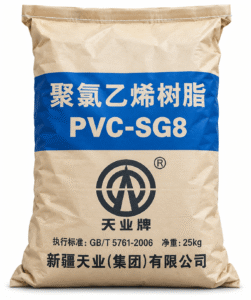
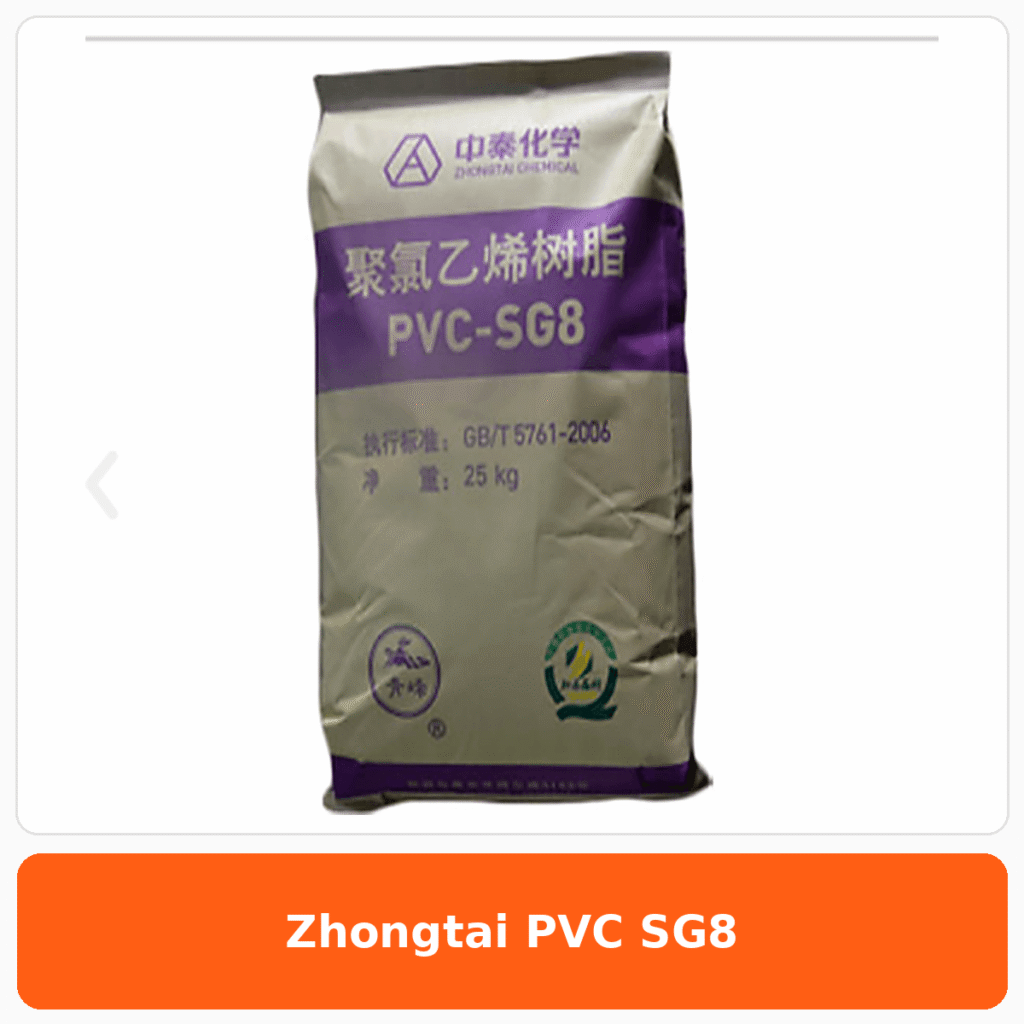
PVC SG8 is a high polymerization, rigid polyvinyl chloride (PVC) resin produced by suspension polymerization, with an average degree of polymerization of 620u2013780 and a K value of 68u201366. Compared with the general-purpose PVC SG5, SG8 has a higher molecular weight and molecular strength, resulting in superior mechanical properties, internal pressure resistance, and forming resistance. It is particularly suitable for the production of rigid extruded and injection-molded products.
Currently, the main manufacturers of PVC SG8 include Zhongtai Chemical, Xinjiang Tianye, Shandong Beiyuan, Bayuan Chemical, Beiyuan Chemical, and Inner Mongolia Wuhua, all of which use the calcium carbide-based suspension polymerization process.
Product specifications
Item
PVC SG8
Viscosity No. (ml/g)
80u201373
K value
68u201366
Polymerizing Index
740u2013850
Number of impurity particles
20 max
Volatile Matter, %
0.4 max
Apparent Density, g/ml
0.50 min
Number of Fish Eye (u2264400 cmu00b2)
20 max
Plasticizer absorption of 100g resin, g
12 min
VCM Residue, ppm
5 max
Whiteness (160u00b0C, 10min), %
75 min
Particle size >0.25mm
2.0 max
Particle size >0.063mm
95 min
u00a0
Performance Features of PVC SG8
1. Excellent Mechanical Properties
With a relatively high molecular weight, PVC SG8 provides superior impact resistance and mechanical strength. Its high degree of polymerization offers excellent internal pressure resistance, making it suitable for manufacturing pressure-bearing pipes.
2. Good Processing Adaptability
SG8 PVC resin can be processed by extrusion, injection molding, and compression molding. It has good compatibility with processing aids and thermal stabilizer systems.
3. Strong Chemical Resistance
It offers good resistance to acids, alkalis, and most salts, and is not affected by oils or alcohol-based solvents.
4. Outstanding Electrical Insulation
With high volume resistivity and low dielectric loss, PVC resin SG8 is well suited for electrical insulation applications such as cable sheathing and electrical conduit pipes.
5. Cost-Effective
PVC material is known for its stable price, low production cost, and strong availability. Although PVC resin SG8 is slightly more expensive than SG5, it offers excellent cost-effectiveness in applications requiring higher mechanical strength.
Primary Uses of PVC Resin SG8
Pipe and Fitting Systems: PVC resin SG8 performs well in rigid PVC pipe systems such as UPVC water supply pipes, agricultural irrigation pipes, and pressure transmission pipelines. Manufacturers also use this grade for injection-molded pipe fittings, including elbows, tees, and various connectors, where it delivers stable dimensions and reliable mechanical strength.
Profiles: The resin suits the extrusion of building door and window profiles, decorative trim profiles, and a wide range of housing profiles. Products made from SG8-grade material offer good rigidity, smooth surface appearance, and long-term service performance.
Electrical Products: Producers commonly apply PVC SG8 in wire and cable protective conduits, electrical conduit pipes, and cable tubing systems with varying accessories. These products provide effective electrical insulation and dependable long-term performance.
Sheets and Plates: This material supports the production of rigid PVC sheets and plates used in furniture panels and chemical corrosion-resistant boards. The material offers good stiffness, chemical resistance, and easy secondary processing.
Other Industrial Products: It also serves in PVC corrugated roofing sheets, transparent PVC products with added UV stabilizers, and drip irrigation tape substrates, meeting requirements for weather resistance, transparency, and processing stability.
Environmental and Safety Key Points
Although processing temperatures are relatively low, accurate ventilation is still required to prevent the accumulation of residual VCM (vinyl chloride monomer). It is recommended to equip facilities with activated carbon adsorption systems.
Preferably, use calcium-carbide-based resins to produce RoHS-compliant electronic and electrical components, with heavy metal content u226450 ppm.
Waste PVC SG8 products can be mechanically recycled. Recycled materials can be used to manufacture items such as building cover panels and industrial pellets. Due to the lower initial technical strength, it is recommended that recycled material is not reused more than twice to ensure product performance.